
Lede
Jurassic Park still understands scale better than the cinemas charging extra for the privilege of remembering it.
Hermit Off Script
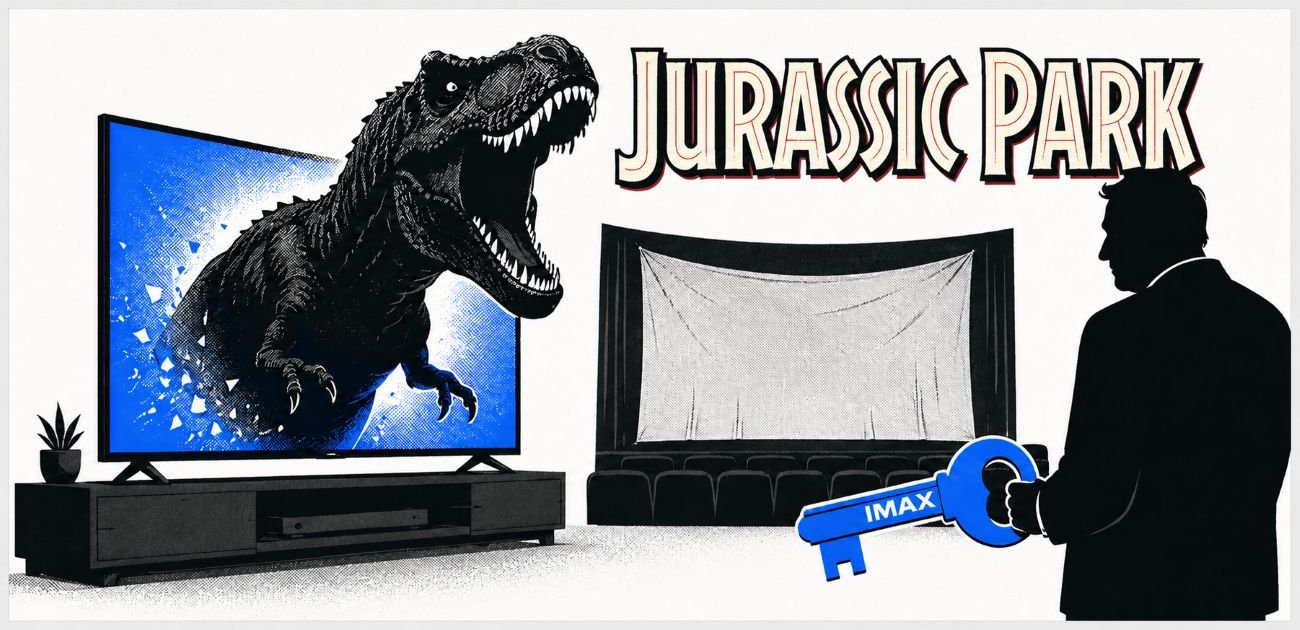
Jurassic Park back in the cinema was impossible for me to miss. Obviously, I wanted IMAX, because this film was built for scale, teeth, rain, thunder and that beautiful moment when silence becomes danger. But of course there is one premium room, the golden cave, the giant screen everyone has to fight for, while the standard screens sit there like projector cupboards with seats.
By now, every major cinema should be thinking clearly: if home screens have become this good, the public room must become sharper, louder, bigger and more alive. Instead, too many cinema owners behave as though they are guarding a museum of sticky floors. They talk about saving cinema while keeping the best experience rationed like wartime butter.
And still, Spielberg’s control is ridiculous. More than 30 years later, knowing exactly what comes next, the tension still works. The water trembles, the fence fails, the kitchen becomes a war zone, and somehow the old magic still bites. That is the real lesson. The film has aged better than many cinemas showing it.
What I could not get out of my head was the simple, awkward truth that my television at home now looked better than the standard cinema screen I had just used. The cinema still wins on sound, at least for now, but even that gap is something a decent home setup can chase.
Maybe in 5 to 10 years, AI will create full 360-degree worlds from existing films. Not merely watching Jurassic Park, but standing inside the rain, hearing the fence hum behind you and seeing the trees move where the camera never looked. As an idea, not a fact, that future feels closer than cinema owners want to admit.
If cinemas keep treating large-format screens, laser projection and proper 4K presentation like rare fossils instead of survival tools, the next predator will not be streaming. It will be experience itself. The dinosaurs aged beautifully. The cinema business looks like the fossil.
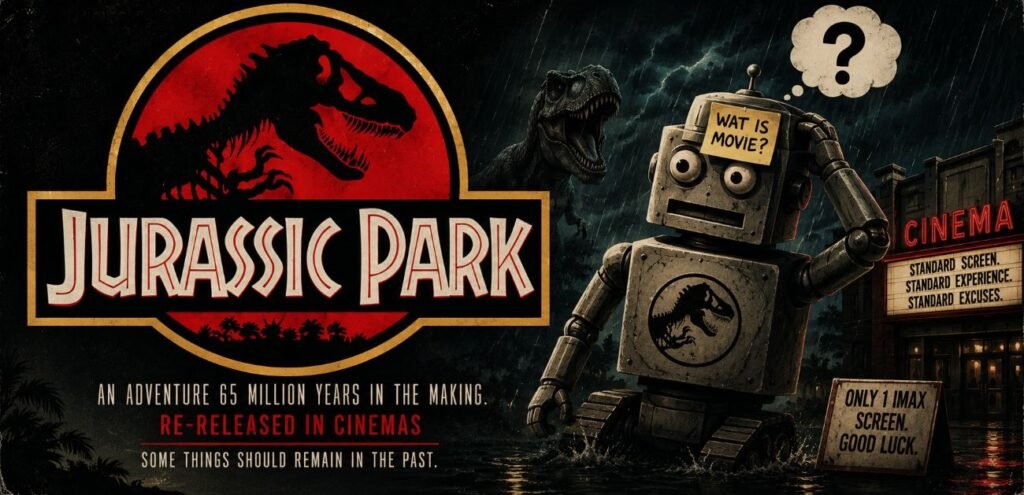
P.S. The screening was almost full as well, probably helped by Unlimited cards doing what sensible pricing often does: getting people back into seats. Funny how cinema suddenly looks alive when the ticket does not feel like a small mortgage with popcorn.
Short synopsis roast of every Jurassic film so far
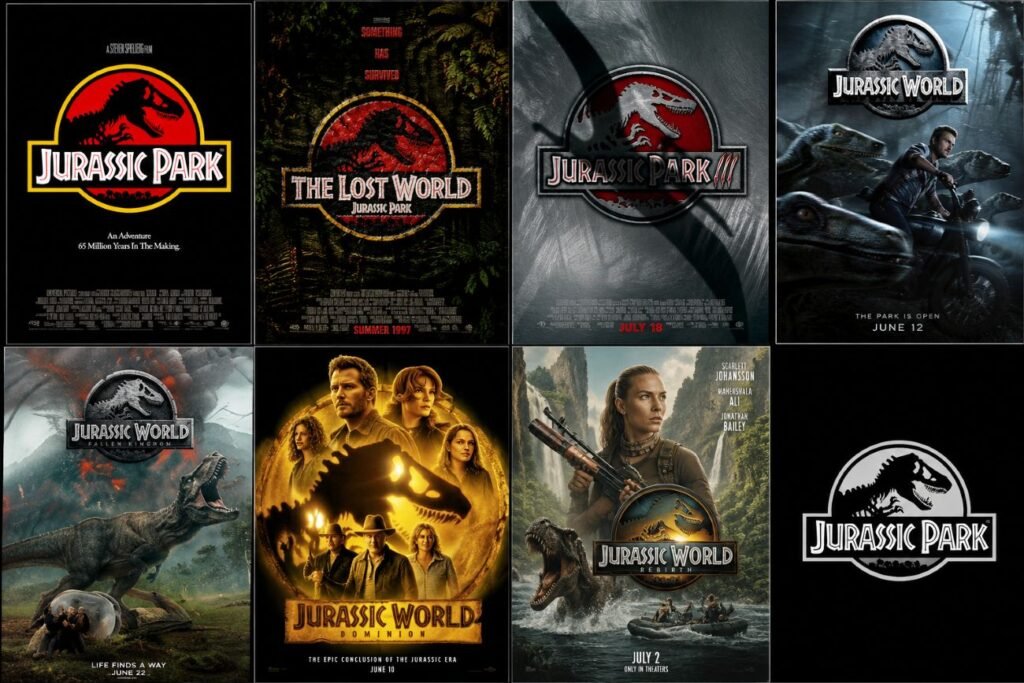
- Jurassic Park (1993)
A billionaire builds a dinosaur theme park before the safety system has finished growing a spine. The dinosaurs behave like dinosaurs, the humans behave like meeting notes with legs, and Spielberg somehow makes a fence, a goat and a glass of water feel like prophecy. - The Lost World: Jurassic Park (1997)
The second island is supposed to be left alone, so naturally everyone arrives with cameras, cages, guns and corporate confidence. It is basically nature saying “please stop touching things” while humans ask where the gift shop goes. - Jurassic Park III (2001)
Alan Grant is tricked back into dinosaur trouble because apparently “do not go to the island” was too complex as a survival plan. Shorter, louder, messier, and still useful as proof that trauma plus bad funding can ruin a perfectly good palaeontologist’s week. - Jurassic World (2015)
The park finally opens, and visitors get bored of actual dinosaurs, which is humanity’s CV in one sentence. So the company builds a hybrid super-predator, because nothing says customer retention like making the attraction actively hunt the customers. - Jurassic World: Fallen Kingdom (2018)
The dinosaurs face a volcanic disaster, then get rescued into an even stupider human disaster. The film asks whether we should save them, then immediately reminds us that rich people will auction anything with teeth if the lighting is nice. - Jurassic World Dominion (2022)
Dinosaurs now live alongside humans, but somehow the plot finds time to make giant locusts the headline crisis. Bringing back the original cast was the right instinct; giving them a global bug audit was the sort of choice that makes a T. rex look underused. - Jurassic World Rebirth (2025)
A new team heads to another dangerous dinosaur site to collect genetic material for medical research, because the franchise has now reached the “one more island, but this time with paperwork” stage. It still understands that people will pay to see teeth in water, and honestly, fair enough.
Spielberg: The Man Who Made Water Act Better Than Most Actors
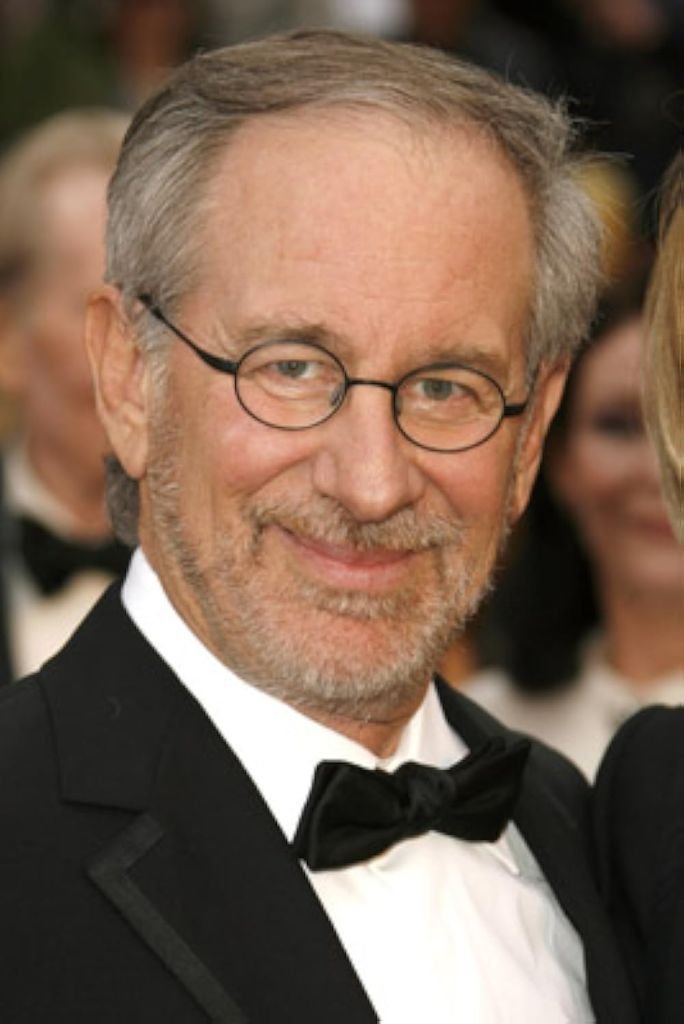
Steven Spielberg can make a glass of water more frightening than many modern monsters. His gift in Jurassic Park is simple: he lets the dinosaur arrive late, lets silence do the unpaid labour and trusts the audience to feel danger before the teeth appear.
The industry learned the wrong lesson. It saw dinosaurs. Spielberg saw timing. That is why the 1993 film still breathes while much of the later franchise runs around with a clipboard trying to measure its pulse.
Amblin credits Spielberg as director and records the film’s 3 Academy Awards for visual effects and sound.
Jurassic Park (1993) Theatrical Trailer
On Isla Nublar, billionaire John Hammond invites palaeontologists Alan Grant and Ellie Sattler, mathematician Ian Malcolm and several other guests to inspect a theme park populated by cloned dinosaurs. When the park’s security systems fail, the visitors and Hammond’s grandchildren must survive while the animals roam freely. Based on Michael Crichton’s 1990 novel, the film follows the collision between scientific ambition, corporate confidence and systems that fail under pressure.
Cast and credits
Director: Steven Spielberg
Writers: Michael Crichton and David Koepp, based on Michael Crichton’s 1990 novel
Genre: Science-fiction adventure thriller
Main cast: Sam Neill, Laura Dern, Jeff Goldblum, Richard Attenborough, Ariana Richards, Joseph Mazzello, Wayne Knight, Samuel L. Jackson, Bob Peck, Martin Ferrero, B. D. Wong
Composer: John Williams
Production company/studio: Universal Pictures and Amblin Entertainment
Runtime: 127 minutes
Release year and platform: Released theatrically in 1993; returned in Digital 4K for its 30th-anniversary cinema re-release in 2023 and later repertory screenings
What does not make sense
- A film about spectacular technology resting on one fragile system keeps returning to cinemas that ration their best projection.
- Standard cinema screens are competing with modern TVs, then acting offended when the TV looks less tired.
- Cinemas want streaming to feel small, then make the big screen feel ordinary.
- The film’s famous corporate boast is “We spared no expense”; the exhibition strategy often feels like “We spared what we could get away with.”
- Nostalgia can sell the ticket, but presentation has to earn the journey.
- If only premium screens feel truly cinematic, then ordinary screens are not ordinary. They are a warning label.
Sense check / The numbers
- Jurassic Park opened in the United States on 11 June 1993, runs for 127 minutes and won 3 Academy Awards for visual effects and sound. [Amblin] [BFI]
- The BFI IMAX presented the film’s 30th-anniversary screening in 2023 as a 127-minute Digital 4K presentation with a UK certificate of 12A. [BFI IMAX]
- Box Office Mojo lists approximately USD 1.103 billion worldwide across all releases, including about USD 978.17 million from the original release. [Box Office Mojo]
- UK cinema admissions fell from 176.1 million in 2019 to 123.5 million in 2025, a decline of about 30 per cent. [UK Cinema Association]
- Cineworld currently lists 26 IMAX-equipped cinemas across the UK, but only 9 locations with IMAX laser projection. [Cineworld]
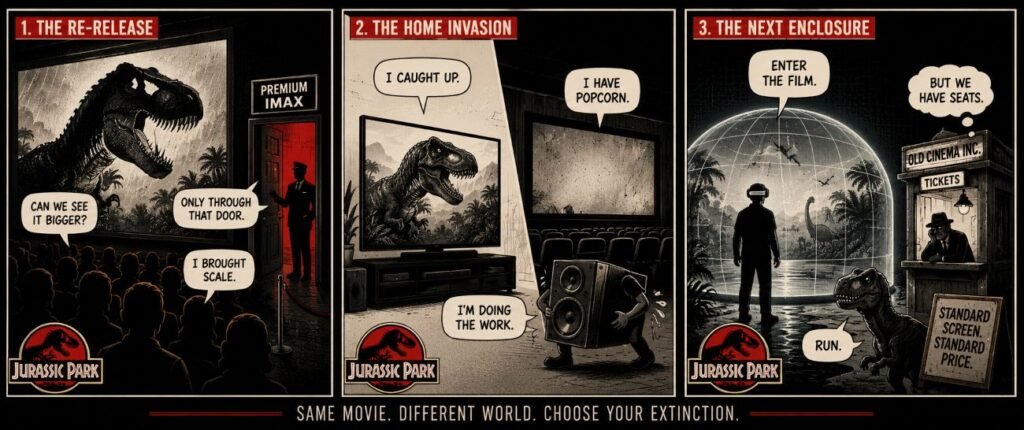
The sketch
Scene 1: The Re-release
A huge dinosaur shadow fills a standard cinema screen while a cinema owner stands beside a locked door labelled “Premium”.
Dialogue:
Viewer: “Can we see it bigger?”
Owner: “Only through that door.”
T. rex: “I brought scale.”
Scene 2: The Home Invasion
A bright home television stands beside a drooping standard cinema screen while a giant speaker carries the cinema on its back.
Dialogue:
TV: “I caught up.”
Cinema: “I have popcorn.”
Speaker: “I am doing the work.”
Scene 3: The Next Enclosure
A viewer stands inside a glowing 360-degree AI dome while an old cinema owner polishes a coin beside a tiny ticket booth.
Dialogue:
AI: “Enter the film.”
Owner: “But we have seats.”
Dinosaur: “Run.”
What to watch, not the show
- Premium formats being treated as luxury extras rather than the reason to leave the house.
- Home cinema closing the gap on picture quality while cinemas lean too hard on nostalgia.
- Re-releases becoming low-risk revenue while basic projection standards lag behind.
- Sound remaining cinema’s strongest weapon, but only if venues keep it clean, calibrated and powerful.
- AI, VR and 360 storytelling raising ugly questions about rights, consent, studio ownership and the future of actors.
- The old cinema habit of blaming audiences instead of improving the room.
The Hermit take
Jurassic Park still has better timing than half the modern release calendar.
Cinema’s problem is not extinction. It is hesitation.
Keep or toss
Verdict: Keep / Toss.
Keep the film, the tension, the sound and the spectacle.
Toss the lazy standard screen pretending it is still 1993.
Sources
- Amblin official Jurassic Park page: https://amblin.com/movie/jurassic-park/
- BFI IMAX 30th-anniversary Digital 4K listing: https://whatson.bfi.org.uk/imax/Online/default.asp?BOparam::WScontent::loadArticle::permalink=jurassicparkimax
- Box Office Mojo worldwide grosses and re-releases: https://www.boxofficemojo.com/title/tt0107290/
- UK Cinema Association annual admissions: https://www.cinemauk.org.uk/the-industry/facts-and-figures/uk-cinema-admissions-and-box-office/annual-admissions/
- Cineworld UK IMAX cinema count: https://help.cineworld.co.uk/support/solutions/articles/103000314216/
- Cineworld UK IMAX with Laser locations: https://help.cineworld.co.uk/support/solutions/articles/103000314217/