
Lede
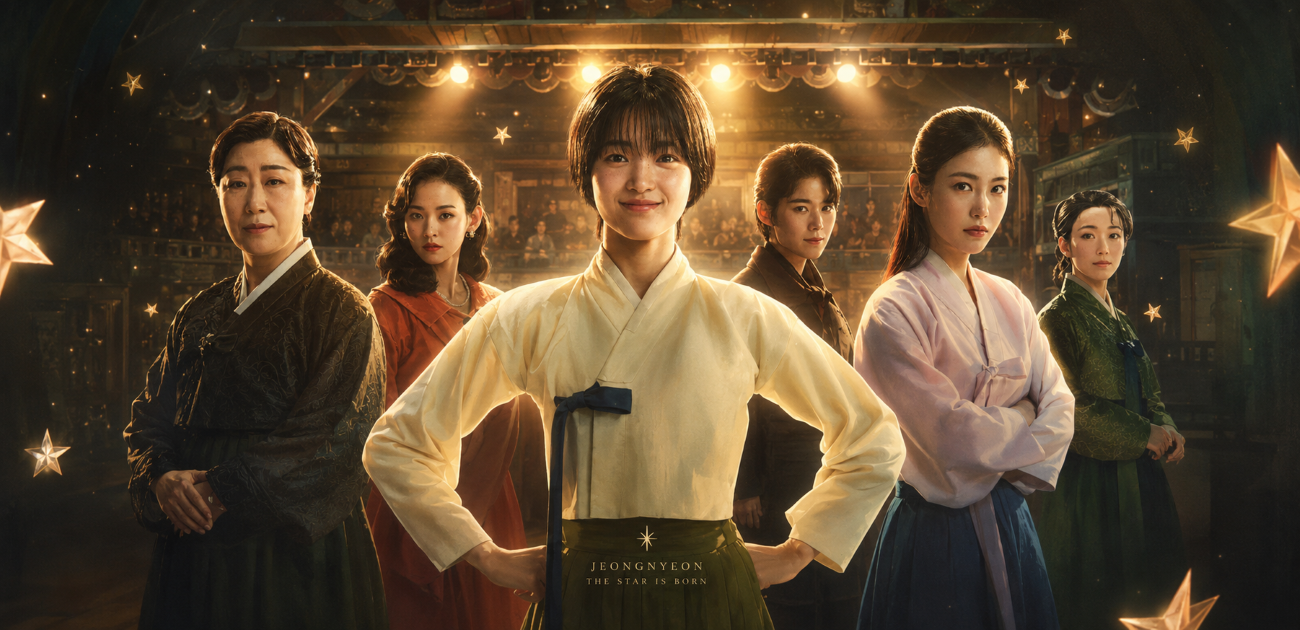
A series called The Star Is Born proves that no star is ever born alone.
Choose your place on the stage
Start with the feeling, learn what stood behind the performances, or go straight to the satire. No man is required to direct traffic.
Words used
- Pansori (Korean: 판소리): Korean musical storytelling traditionally performed by one singer and one drummer.
- Yeoseong gukgeuk (Korean: 여성국극): All-women Korean musical theatre combining pansori, acting and dance, with women performing both male and female roles.
- Gisaeng (Korean: 기생): Professional female entertainers in Korea’s Goryeo and Joseon dynasties. Technically part of the lowest enslaved class (cheonmin), they were highly educated in the fine arts, poetry, and music. Despite their marginal legal status, they shaped traditional Korean culture and left a rich literary legacy.
Hermit Off Script
I had been reading about Jeongnyeon: The Star Is Born (Korean: 정년이) for quite some time. The reviews were good, but Kim Tae-ri was the stronger reason I wanted to watch it. She has become one of those actors whose name makes me trust the project before the opening scene. Anything she chooses usually gives me something different, whether through the story, the character or the way she enters a role completely. So when I saw the title appear on Disney+, I started bingeing it almost immediately. I already knew about pansori. I had listened to it before and liked selected performances, although never deeply enough to understand the acting, vocal technique and physical discipline surrounding it. Jeongnyeon opened another door in my soul, as Korean culture and tradition have done several times before. I don’t like every traditional performance simply because it is traditional. That would be cultural tourism wearing a serious expression. Yet when something reaches me, it can bring tears before I fully understand the words. The subtitles may explain the meaning, but sometimes the voice has already done the work. Every actor in this drama fits the role with astonishing care. The lessons about talent, practice, rivalry, stage presence and finding your own voice apply far beyond gukgeuk. They apply to acting and singing in general. Period dramas are already demanding because actors must adjust their speech, movement, posture and behaviour to another time. Here they also had to perform regional dialects, traditional singing, dance and theatre within television acting. That is several jobs wearing one costume. Many scenes feel difficult, carefully built and beautifully performed. Another actor could probably have played Jeongnyeon well. That does not mean another actor would have created the same Jeongnyeon. Kim Tae-ri brings a particular mixture of innocence, stubbornness, humour and emotional force. She has never avoided difficult or daring roles, as viewers of The Handmaiden already know. Yet this series does not survive through her alone. Shin Ye-eun, Ra Mi-ran, Jung Eun-chae, Kim Yoon-hye, Moon So-ri and the wider cast don’t stand around waiting for the lead actor to finish being impressive. They build the world around her and make her performance possible. Some people become known as the talent while others receive the label “supporting”, as though holding up the entire building were a minor administrative duty. Jeongnyeon quietly corrects that nonsense. In the larger picture suggested by gukgeuk itself, every performer contributes to the shape, rhythm and feeling of the whole production. The title gives us one star. The drama earns a whole sky.
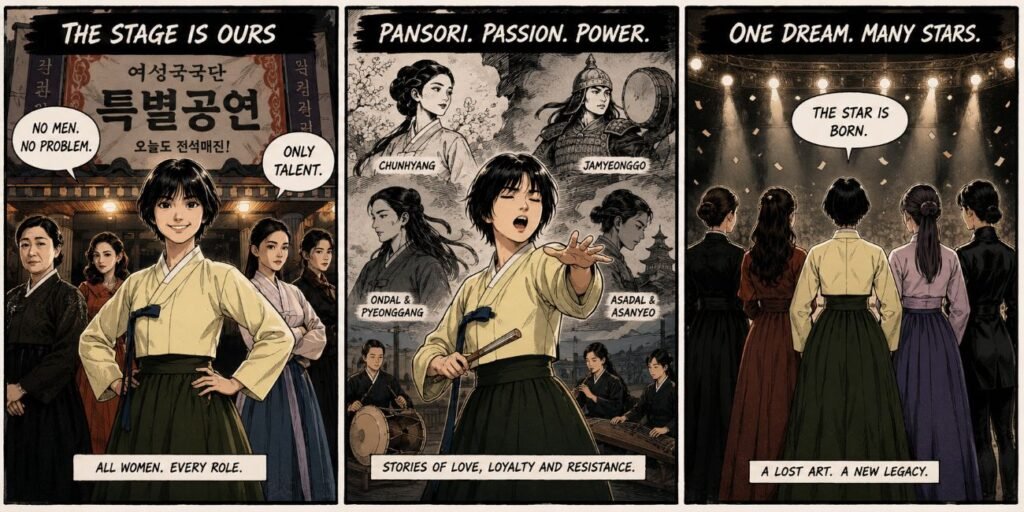
P.S. Give me a drama or film where women play every role – women, men, heroes, villains and possibly the stage curtains. No men needed. I’ll watch the whole thing. That is probably one reason I loved this drama so much, alongside the pansori.
Before you watch: the stage behind Jeongnyeon
Jeongnyeon: The Star Is Born can be enjoyed without knowing anything about Korean theatre, pansori or the webtoon. I proved that by pressing play first and doing the homework later. Yet the drama becomes much richer once you understand what the characters are performing, why women playing every role mattered, and what the television adaptation kept or removed from its source.
This is a drama about talent and rivalry, but it is also a drama about an art form that almost disappeared. The stage performances are not decorative pauses between plot scenes. They are where the characters reveal who they are, what they fear and what kind of artists they may become. A viewer who skips through them would be skipping through the heart of the series.
The webtoon that came before the drama
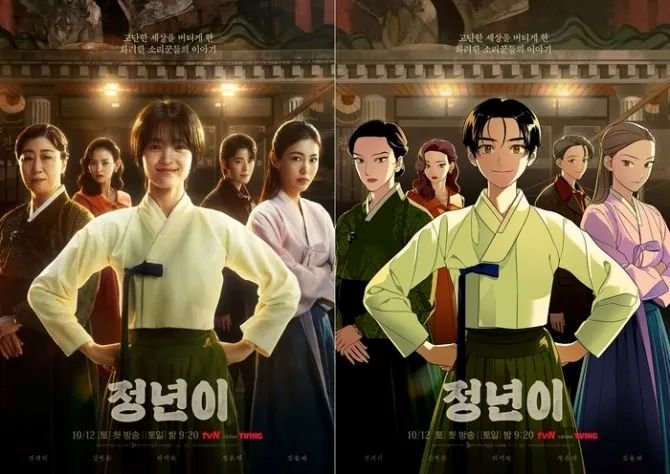
The series is based on Jeong Nyeon, a Naver webtoon written by Seo Ireh and illustrated by Namon. It was serialised between 2019 and 2022 and later collected into 10 volumes. The story follows a poor young woman from Mokpo who enters the world of women’s gukgeuk during its golden age in the 1950s. [Naver Webtoon, Korea Herald]
The webtoon creators did not simply borrow a colourful old theatre setting. They brought attention back to a part of Korean cultural history that had faded from public memory. Women’s gukgeuk once filled theatres, created famous stars and attracted passionate female audiences, but recordings, scripts and detailed histories of many performances were not properly preserved. What looked like forgotten entertainment was also forgotten women’s history.
The original work places female ambition, artistic partnership and emotional relationships between women at its centre. That matters because the television drama is not a page-for-page translation. It keeps Jeongnyeon, the troupe, the rivalries and the performances, but changes several characters and themes.
Pansori, changgeuk and women’s gukgeuk
These terms are connected, but they do not mean the same thing.
Pansori is a form of musical storytelling traditionally performed by one singer and one drummer. The singer does far more than sing a melody. She or he narrates the story, performs every character, moves between speech and song, uses gesture and changes voice according to age, class, mood and personality. The drummer maintains the rhythm and responds with encouraging calls known as chuimsae. A full traditional performance can last for several hours. [UNESCO, Korea Heritage Service]
Changgeuk developed by dividing a pansori story among several performers. Instead of one singer playing the entire world, individual actors take separate roles. Costumes, scenery, lighting, choreography and a larger musical ensemble turn the story into something closer to opera or musical theatre. [KBS World]
Women’s gukgeuk, or yeoseong gukgeuk, took this form and created theatre performed entirely by women. Women played the heroines, kings, generals, servants, lovers and villains. No man was required to arrive in the final act and rescue the production from excessive female competence.
The form is generally traced to 1948, when the Women’s Korean Traditional Music Association began producing all-women performances. It became hugely popular after the Korean War. According to the Korea Heritage Agency, about 25 women’s gukgeuk troupes operated between 1948 and 1969. Performers such as Lim Chun-aeng and Cho Geum-aeng became major stars before film and television drew audiences towards newer entertainment. [Korea Heritage Agency, Ministry of Culture, Sports and Tourism]
This history explains why the drama’s all-women stage is more than a novelty. Post-war Korea remained deeply restrictive for women, but these troupes gave them room to earn money, travel, create public identities and become objects of admiration. Women were not merely allowed on the stage. They owned the stage.
Male-role specialists were especially important. They trained their voices, movement, posture and expressions to create convincing male characters without simply copying men. Their performances also allowed female audiences to see romance, masculinity and power presented through women’s bodies and artistic choices. That helps explain why the stars attracted intense fandoms that resemble the devotion surrounding modern singers and actors.
Why the language can feel difficult
The drama is challenging even for some Korean viewers because it combines several layers of language.
Jeongnyeon comes from Mokpo and speaks with a strong South Jeolla dialect. The series is also set in the 1950s, so some vocabulary, expressions and social manners sound older than everyday Korean. The stage performances add another layer because their words come from folktales, classical stories and pansori traditions. [LA Seoulite, Korea JoongAng Daily]
Subtitles can translate the basic meaning, but they cannot carry every sound, rhythm, class marker or regional association. A sentence may tell an international viewer that someone is angry, while a Korean listener also hears where the character comes from, how educated she is and whether she is respecting or challenging the person before her.
Pansori also uses stretched syllables, repetition, vocal texture and changes in rhythm to create emotion. Sometimes the meaning is not hidden inside a sentence waiting for a translator. It is inside the roughness of the voice, the pause before a word and the singer’s physical struggle to release it.
That may be why a performance can bring tears even when every word is not understood. The subtitle translates the story. The voice delivers the wound.
The stories performed inside the drama
Knowing the older stories makes the stage scenes easier to follow. The characters are not only playing fictional roles. They are interpreting stories many Korean viewers already recognise, much as a British audience may recognise Shakespeare, King Arthur or a familiar folk ballad before the actors say their first lines.
The Story of Chunhyang
Chunhyang is the daughter of a former gisaeng, while Yi Mong-ryong is the son of a magistrate. They fall in love despite their different social positions. Mong-ryong later leaves Namwon, and a corrupt new magistrate attempts to force Chunhyang to submit to him. She refuses and is imprisoned.
Mong-ryong eventually returns disguised as a poor traveller, although he has secretly become a royal inspector with the authority to expose corrupt officials. The story combines romance with resistance to class power and official abuse. [Korea.net]
In Jeongnyeon, the meaning lies not only in who plays Chunhyang or Mong-ryong. The role of Bang-ja, Mong-ryong’s servant, becomes an important test of whether a performer can transform a supposedly secondary character into the person the audience remembers.
That supports one of the drama’s strongest arguments about acting. There are no small roles when an actor understands what the role is doing.
Jamyeonggo
Jamyeonggo means the self-beating drum. The legend concerns Prince Hodong of Goguryeo and the Princess of Nakrang, whose kingdom is protected by a drum said to sound automatically when an enemy approaches.
Hodong persuades the princess to destroy the drum, making an invasion possible. Her choice leads to the fall of her homeland and her death. It is a story of love poisoned by politics, loyalty divided between a person and a country, and a woman forced to carry the cost of a prince’s ambition. [Korea.net, KBS World]
The drama’s stage version introduces additional characters and theatrical changes. Viewers should therefore treat it as a performance inspired by the old legend, not a history lesson wearing expensive robes.
The Fool and the Princess
This story concerns Ondal, a poor man mocked as a fool, and Princess Pyeonggang of Goguryeo. Her father repeatedly joked that her crying would lead him to marry her to Ondal. When he later arranged a more suitable royal marriage, she held him to his own words and chose Ondal.
The princess used her resources and knowledge to help Ondal develop his abilities. He later became a respected general. After he died in battle, legend says that his coffin could not be moved until Pyeonggang spoke to him and told him it was time to return home. [Korea.net]
The story can be presented as a princess improving an inadequate man, which is the version patriarchal society tends to enjoy because even female strength must apparently be submitted as a male development programme. It can also be read as a woman refusing an arranged future, recognising value where society sees none and creating a life through her own decision.
The drama gives the performers room to test both readings.
The Legend of the Twin Pagodas
The final major theatrical story draws upon the legend of Asadal and Asanyeo, associated with Seokgatap at Bulguksa Temple in Gyeongju.
Asadal is a stone mason who travels to build the pagoda. His wife, Asanyeo, waits to see its reflection in a nearby pond because she has been told that the completed pagoda will appear there. The reflection never comes. Believing she will not see her husband again, she dies in the pond. Asadal later learns what happened and follows her in death.
The tale is often presented as an ancient legend, but the familiar version appears to have developed from the early 20th-century novel The Shadowless Pagoda rather than from a reliable record of the pagoda’s construction. The drama then reshapes it again for its own theatrical purpose. [LA Seoulite]
This is a useful warning against treating every historical costume as evidence. Sometimes history becomes legend, legend becomes literature, literature becomes theatre, and theatre becomes television. By the time it reaches Disney+, the facts have changed clothes several times.
The performances are acting, singing and interpretation
The series asks its cast to perform on several levels at once. They must play television characters who are themselves learning to become stage actors. During a performance, Kim Tae-ri is therefore not simply acting as Jeongnyeon. She is acting as Jeongnyeon acting as Bang-ja, Ondal or another theatrical character, while also controlling song, gesture, choreography and the character’s current level of experience.
A weaker production might solve this by placing polished professional voices over the actors. Jeongnyeon did not take that easy road with its principal performers.
Kim Tae-ri began vocal training after accepting the role and worked with separate teachers for pansori, dance and the Mokpo dialect. She credited pansori teacher Kwon Song-hee, dance teacher Lee Ee-seul and dialect coach Jung Soo-jung for helping her prepare. [Korea JoongAng Daily]
Shin Ye-eun also recorded her own singing for her performances, including the Bang-ja stage sequence. [Koreaboo]
Moon So-ri trained for nearly a year for “Chuwolmanjeong”. She estimated that singing it 3 times a day meant she had practised it more than 1,000 times. She also spent 4 days speaking with older women in markets and recording their accents as part of her dialect preparation. [Korea Times]
The vocals may be recorded before filming so the stage action can be synchronised, but pre-recording an actor’s own performance is not the same as replacing her with another singer. The work remains in the breath, the training and the body of the actor we see.
That is why the performances feel different according to who is playing the role. The drama repeatedly lets us watch more than one actor approach similar material. One performer may have a stronger voice, another more control, and another the ability to make the audience forget that technique exists. The series does not present acting as a school examination with one correct answer. It presents it as a meeting between a role and a particular human being.
What the television adaptation removed
The drama’s relationship with the webtoon deserves attention because one major source character, Bu-yong, was removed.
In the webtoon, Bu-yong is Jeongnyeon’s first devoted fan, creative partner and love interest. She is also a playwright connected to the creation of The Legend of the Twin Pagodas. The television director said that elements of Bu-yong were distributed among other characters, but critics argued that removing her weakened the source’s queer and feminist meaning. [Korea Times]
Another removed character, often called Mr Go, is a woman who dresses as a man and teaches Jeongnyeon about performing male roles. Her story dealt directly with gender restrictions and the difference between playing masculinity on stage and living under its rules.
The television drama remains almost entirely centred on women, which is already unusual and valuable. Yet a production can contain many women while still reducing some of the source’s strongest ideas about relationships between women, queer identity and resistance to marriage.
This does not make the series worthless. It does mean that the drama should not be treated as the complete form of Jeongnyeon. The webtoon and television series make different choices, and some viewers may admire the adaptation while still questioning what it was afraid to carry onto the screen.
Where the adaptation loses its nerve
I loved the cast, the pansori and the return of women’s gukgeuk to popular attention. That does not mean the adaptation deserves polite silence for every choice it made.
The television version removes Bu-yong and Mr Go, weakens several queer and feminist ideas from the webtoon, compresses Jeongnyeon’s voice-loss story, pushes Joo-ran towards marriage and ends with the troupe dismantled while the individual star reaches the light. Historical decline explains part of that ending. It does not automatically justify every creative decision.
The cast performs with the courage the adaptation keeps misplacing. I examine that argument properly in the full roast.
Read the full Jeongnyeon roastIs Jeongnyeon worth choosing?
Watch it if you enjoy actors disappearing into demanding roles, women occupying nearly every important position in a story, historical settings, artistic rivalry, traditional music or dramas where performance itself becomes part of the plot.
Watch it if you are willing to spend time with rehearsals and complete stage sequences instead of expecting the theatre scenes to be reduced to a 20-second montage followed by applause.
Watch it if Kim Tae-ri is already enough reason. She delivers, but the pleasure comes from seeing Shin Ye-eun, Ra Mi-ran, Jung Eun-chae, Kim Yoon-hye, Moon So-ri and the wider ensemble create a world strong enough to hold her performance.
It may be less suitable if you want a conventional romance, constant action or background entertainment that can be followed while checking your phone. Jeongnyeon asks you to watch faces, voices, posture and the way one actor responds while another owns the stage.
Prior knowledge is not required. Curiosity is.
Jeongnyeon: The Star is Born | Official Trailer
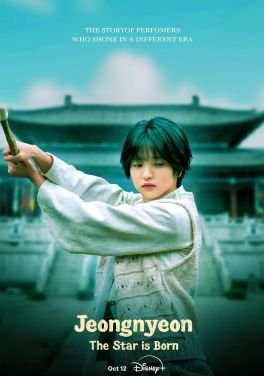
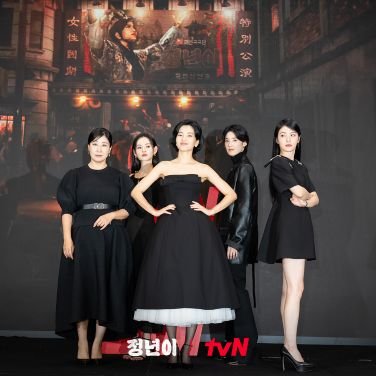
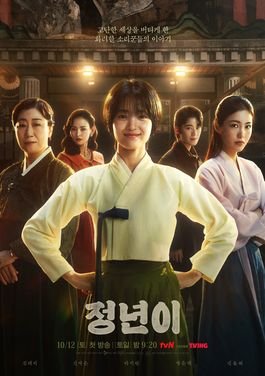
Set in post-war Korea during the 1950s, the series follows a gifted young singer from Mokpo who joins an all-women gukgeuk troupe and begins learning what talent costs after the applause stops.
Cast and credits
Director: Jung Ji-in
Writer: Choi Hyo-bi, based on the Naver webtoon by Seo Ireh and Namon
Genre: Historical drama, coming-of-age and music
Main cast: Kim Tae-ri, Shin Ye-eun, Ra Mi-ran, Jung Eun-chae, Kim Yoon-hye, Woo Da-vi and Moon So-ri
Composer: Jang Young-gyu
Production companies/studios: Studio Dragon, Studio N, Management MMM and NPIO Entertainment
Runtime: 12 episodes, approximately 70 minutes each
Release year and platform: 2024, originally broadcast on tvN and available through Disney+ in selected regions
[Live Video] 이날치 LEENALCHI – 새타령 Bird (정년이 OST Part 1 : 새타령)
What does not make sense
- The title promises one star while the series spends its time showing how many people must work before one star can stand in the light.
- Streaming platforms market the most recognisable face because an ensemble is apparently too many humans for one thumbnail.
- We call people “naturally talented” after they have studied singing, choreography, dialect and acting until natural has very little to do with it.
- Supporting actors are treated as secondary even when removing them would collapse the lead performance.
- Traditional art is often dismissed as old-fashioned until television packages it attractively enough for modern viewers to notice what was already there.
- Subtitles can translate words, but they cannot fully account for why an unfamiliar voice can reach the heart first.
Sense check / The numbers
- The series contains 12 episodes of roughly 70 minutes each, giving it about 840 minutes, or 14 hours, to build its world and performances. [Studio Dragon, IMDb]
- Kim Tae-ri described the difficulty of adapting a 100-episode webtoon into a 12-episode television drama while preserving enough character and story development. [Korea JoongAng Daily]
- Nationwide television ratings rose from 4.8 per cent for the premiere to 16.5 per cent for the final episode. The finale also reached a nationwide peak of 18.2 per cent. [Korea Times, CJ Newsroom]
- Pansori was designated a Korean National Intangible Cultural Property in 1964 and entered UNESCO’s Representative List of the Intangible Cultural Heritage of Humanity in 2008. [UNESCO]
- After the drama renewed public interest in women’s gukgeuk, tickets for a Korea Heritage Agency performance sold out within 40 minutes of reservations opening. [Korea.net]
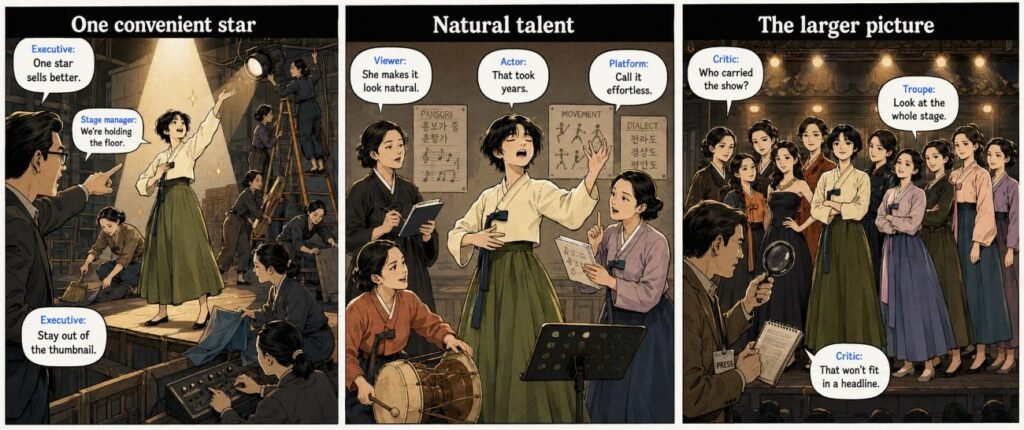
The sketch
Scene 1: One convenient star
A streaming platform executive points one spotlight at the lead actor while an entire troupe holds up the stage behind her.
Dialogue:
Executive: “One star sells better.”
Stage manager: “We’re holding the floor.”
Executive: “Stay out of the thumbnail.”
Scene 2: Natural talent
An actor rehearses while singing, dance and dialect teachers surround her with notes, drums and movement charts.
Dialogue:
Viewer: “She makes it look natural.”
Actor: “That took years.”
Platform: “Call it effortless.”
Scene 3: The larger picture
The full troupe stands beneath several stage lights while a critic searches for one person to praise.
Dialogue:
Critic: “Who carried the show?”
Troupe: “Look at the whole stage.”
Critic: “That won’t fit in a headline.”
What to watch, not the show
- The labour behind authenticity. Moon So-ri described spending 4 days visiting markets, listening to older women and recording their accents as part of her dialect preparation.
- The teachers behind the actors. Kim Tae-ri credited separate pansori, choreography and dialect teachers for preparing her performance.
- The ability of popular television to revive interest in an art form that commercial entertainment had pushed towards the margins.
- The platform habit of selling ensemble work through one famous name.
- The difference between displaying tradition as decoration and treating it as a living discipline.
- The risk of praising talent while hiding the training, repetition and collective support that produced it.
- The way international streaming can introduce cultural forms without reducing them to a tourist brochure.
The Hermit take
Kim Tae-ri may carry the title, but the whole ensemble gives the series its soul.
A true star does not darken the stage around her. She helps everyone shine.
Keep or toss
Verdict: Keep.
Keep the pansori, the period craft, Kim Tae-ri and the entire ensemble.
Toss the lazy belief that one famous face creates a collective miracle.
Sources
- Disney+ official series page: https://www.disneyplus.com/en-gb/browse/entity-ad06e18a-8afa-4271-9643-ab9f00dc36c1
- Studio Dragon series information: https://www.studiodragon.net/en/works/portfolio/jeongnyeon-the-star-is-born/
- CJ Newsroom ratings and international response: https://newsroom.cj.net/jeongnyeon-the-star-is-born-hits-the-global-stage/
- Kim Tae-ri interview on acting, singing and dialect: https://www.koreajoongangdaily.com/entertainment/dance-dialects-pansori-kim-taeri-reflects-on-triple-threat-performance-in-jeongnyeon-the-star-is-born/12112675
- Moon So-ri interview on dialect preparation: https://www.koreatimes.co.kr/entertainment/shows-dramas/20241129/moon-so-ri-reflects-on-her-role-in-jeongnyeon-and-25-years-in-acting
- UNESCO pansori heritage entry: https://ich.unesco.org/en/RL/pansori-epic-chant-00070
- Korea.net report on the revival of women’s gukgeuk: https://www.korea.net/NewsFocus/Culture/view?articleId=263186
- IMDb basic series details: https://www.imdb.com/title/tt28197611/
- Original Naver webtoon page: https://comic.naver.com/webtoon/list?titleId=726214
- Korea Herald interview with the webtoon creators: https://www.koreaherald.com/article/3067299
- UNESCO entry for pansori epic chant: https://ich.unesco.org/en/RL/pansori-epic-chant-00070
- KBS World guide to pansori and changgeuk: https://world.kbs.co.kr/service/special_program.htm?board_seq=812&id=index&lang=e
- Korean Ministry of Culture history of gukgeuk: https://www.mcst.go.kr/english/policy/kocis/newsView.jsp?pSeq=274
- Korea Times history and revival of women’s gukgeuk: https://www.koreatimes.co.kr/lifestyle/arts-theater/20241114/all-women-theater-gukgeuk-stars-reunite-for-special-performance-thanks-to-popularity-of-jeongnyeon-the-star-is-born
- Kim Tae-ri interview on pansori, choreography and dialect: https://www.koreajoongangdaily.com/entertainment/dance-dialects-pansori-kim-taeri-reflects-on-triple-threat-performance-in-jeongnyeon-the-star-is-born/12112675
- Moon So-ri interview on vocal and dialect preparation: https://www.koreatimes.co.kr/entertainment/shows-dramas/20241129/moon-so-ri-reflects-on-her-role-in-jeongnyeon-and-25-years-in-acting
- Korea Times report on changes from the original webtoon: https://www.koreatimes.co.kr/entertainment/shows-dramas/20241123/jeongnyeon-finale-sparks-criticism-for-departing-from-original-webtoon
- LA Seoulite guide to the stories performed in the drama: https://laseoulite.substack.com/p/before-you-watch-the-k-drama-jeongnyeon
- LA Seoulite guide to Asadal and Asanyeo: https://laseoulite.substack.com/p/the-famous-korean-pagoda-and-the
- Korea.net guide to The Tale of Chunhyang: https://www.korea.net/NewsFocus/Culture/view?articleId=124974
- Korea.net guide to Prince Hodong and Princess Nakrang: https://www.korea.net/NewsFocus/Culture/view?articleId=121980
- Korea.net guide to Ondal and Princess Pyeonggang: https://www.korea.net/NewsFocus/Culture/view?articleId=122048