
Lede
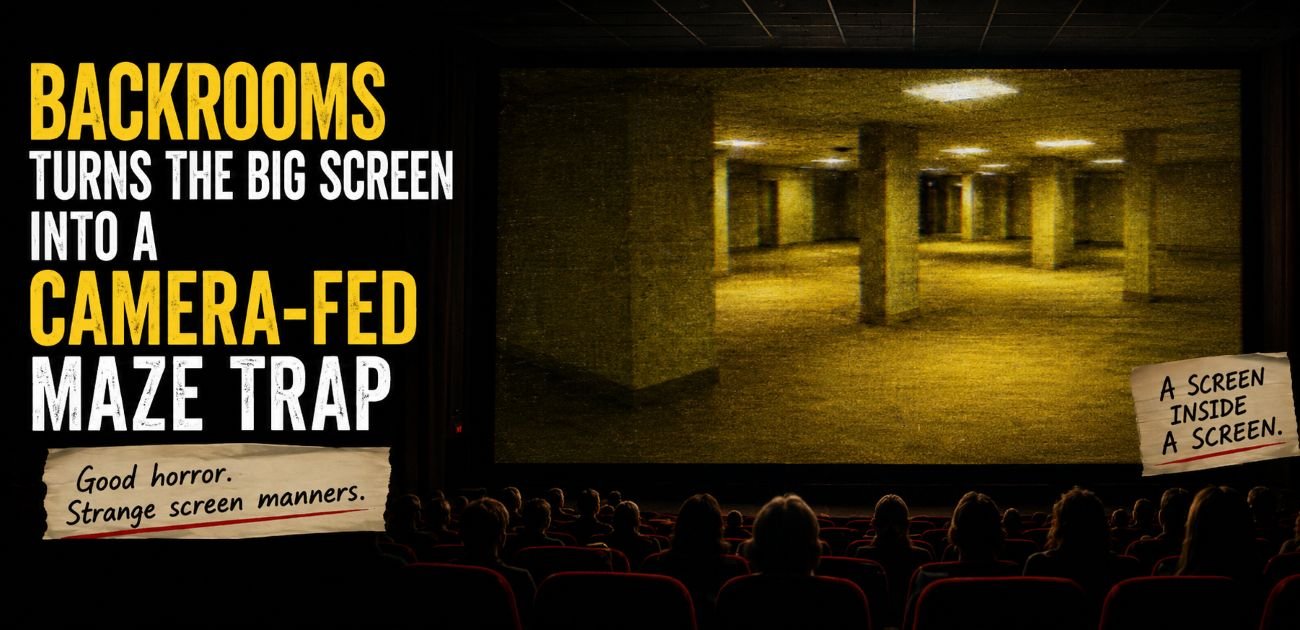
Backrooms bends reality through found footage, but sometimes the camera feed makes the cinema screen feel smaller than the maze.
Words used
- Found footage – a film style that pretends the camera material was recorded by characters inside the story.
- Aspect ratio – the shape of the image on screen, such as wide cinema framing, boxed footage or a smaller camera-feed image inside the cinema frame.
- Liminal horror – horror built around empty in-between spaces, like corridors, offices, malls and rooms that feel familiar but wrong.
Hermit Off Script
Backrooms is trying to make me doubt reality, much like Exit 8 turns repetition into paranoia. I respect that. What bothered me was the camera footage at the beginning. My first thought was simple: please don’t let the whole film look like this. I had a similar first-person problem with Crime 101, but that image still looked clean and deliberate. Here, the picture often feels smaller and more trapped inside the recording device. It looked better than Obsession did in the cinema, but it still had the same shrunken effect: a large screen showing an image that did not always feel made for the room.
At first, I wondered whether the camera quality came from the budget. That explanation does not really hold up. Backrooms comes directly from Kane Parsons’ found-footage web series, and the film had A24, a known cast and a reported USD 10 million budget behind it. The roughness is part of the design. My problem is not that the image is dirty. My problem is that the film does not always make that dirt useful.
If the camera is central to the horror, give me more information from it: timestamps, battery warnings, signal loss, corrupted file names, room data or sound spikes. Then the recording device becomes part of the tension instead of simply lowering the image quality. Poor quality can create mood. Information inside the frame can create fear.
Cinema can use the visual language of internet horror. It should also justify why that language is now filling a large screen. The maze should feel larger than the camera holding it.
P.S. Update – 31 July 2026
Since this article was written, Backrooms has completed most of its cinema run and reached digital rental and purchase on 14 July 2026. The Numbers now lists approximately USD 389.74 million worldwide against its reported USD 10 million production budget. Rotten Tomatoes currently shows 87 per cent from critics and 74 per cent from more than 10,000 verified audience ratings. A longer Everything Must Go edition also reached cinemas in July with about 16 minutes of additional footage. Those later results confirm that the internet-born format found a large cinema audience. They do not change what the image looked like from my seat.
Backrooms | Official Trailer | A24
Movie synopsis
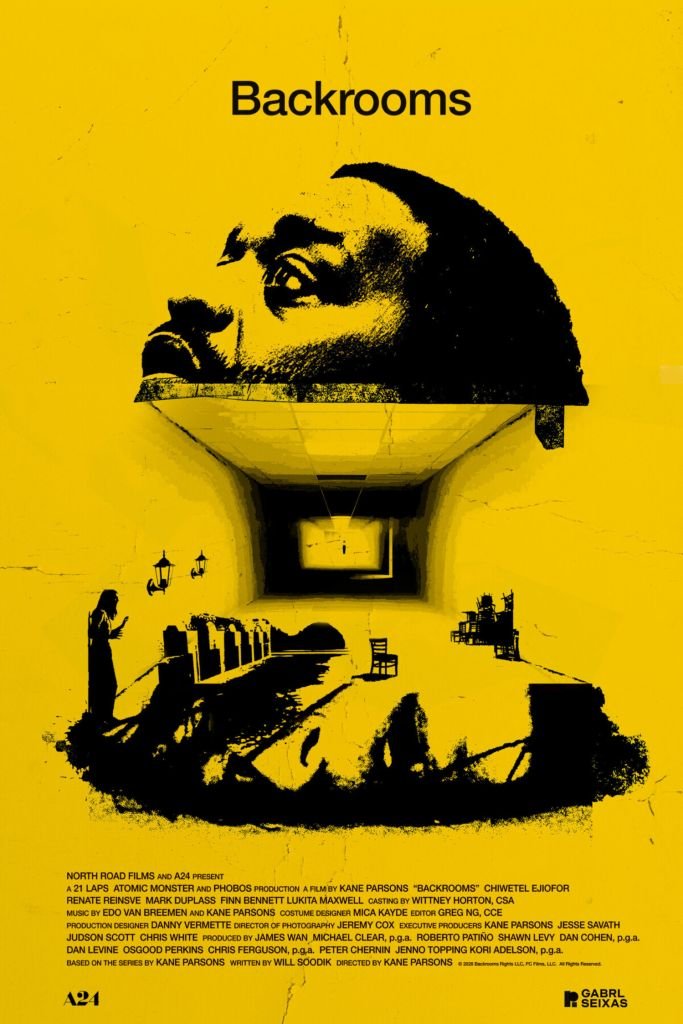
Clark, a struggling furniture-showroom owner, discovers a strange doorway in the building’s basement. It leads into an apparently endless dimension of artificial rooms, empty corridors and spaces that refuse to behave normally. As Clark becomes consumed by the maze and later disappears, his therapist Mary is drawn into the search for him. The film expands Kane Parsons’ internet-born Backrooms series into a feature-length science-fiction horror story.
Cast and credits
Director: Kane Parsons
Writer: Will Soodik, based on the Backrooms series by Kane Parsons
Genre: Science-fiction psychological horror and found footage
Main cast: Chiwetel Ejiofor, Renate Reinsve, Mark Duplass, Finn Bennett, Lukita Maxwell and Avan Jogia
Composer: Kane Parsons and Edo Van Breemen
Production company/studio: A24, Chernin Entertainment, 21 Laps Entertainment and Atomic Monster
Runtime: 110 minutes
UK rating: 15 for strong language, violence, injury detail and horror
Release year and platform: Released in UK cinemas on 29 May 2026
What does not make sense
- A film presented in a 1.85:1 theatrical frame can still spend long stretches making its image feel boxed inside a recording device.
- The story promises endless rooms, but the camera-feed framing sometimes makes the world feel smaller rather than stranger.
- The roughness is deliberate, yet intention alone does not make every rough image effective.
- A reported USD 10 million production built a huge practical maze, but the camera language can make that physical scale feel reduced.
- Cinema asks audiences to leave the sofa, then sometimes presents internet-native footage without adding enough for the larger room.
- A recording device can carry timestamps, warnings, interference and evidence. Without those details, it risks becoming a filter rather than part of the story.
- Internet horror can work in cinemas, but copying its original limitations is not the same as adapting it for the screen.
Sense check / The numbers
- Backrooms opened in UK and US cinemas on 29 May 2026. The original UK cinema version runs for 110 minutes and 20 seconds and carries a 15 classification. [A24] [BBFC]
- The film opened in 3,442 US cinemas and later reached a maximum of 3,565 locations. [The Numbers]
- At the time of writing on 11 June 2026, Rotten Tomatoes showed 88 per cent from 247 critic reviews and 74 per cent from more than 5,000 verified audience ratings. [Rotten Tomatoes]
- The Numbers listed a reported USD 10 million production budget, an USD 81.40 million domestic opening weekend and USD 135.06 million domestically by 7 June 2026. [The Numbers]
- The production used an approximately 30,000-square-foot practical Backrooms set, large enough for members of the production to become lost inside it. [Interview Magazine]
The sketch
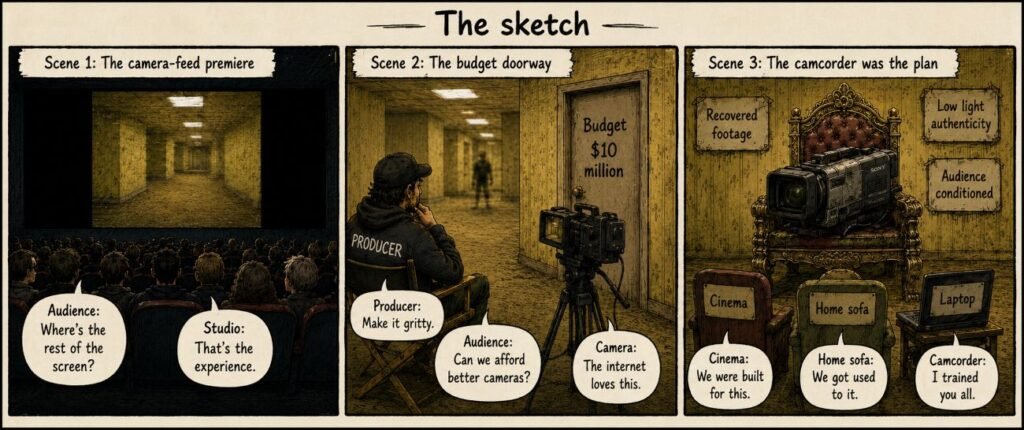
Scene 1: The camera-feed premiere
A cinema audience faces a wide screen containing a much smaller camcorder-style image surrounded by empty black space.
Dialogue:
Audience: “Where is the rest?”
Studio: “That is the experience.”
Scene 2: The deliberate damage
A producer points towards a rough camera feed while a clean cinema camera stands unused beside it.
Dialogue:
Producer: “Make it feel recovered.”
Audience: “Make it feel useful.”
Camera: “Add a timestamp.”
Scene 3: The camcorder takes the throne
An old camcorder sits on a throne inside a yellow corridor while cinema seats, a sofa and a laptop face it.
Dialogue:
Cinema: “I gave you scale.”
Sofa: “I trained the audience.”
Camcorder: “You both serve me.”
What to watch, not the show
- The cinema screen absorbing camera-feed grammar until degraded footage becomes a visual language.
- Horror economics, where low budget can mean creative freedom or convenient roughness.
- Internet-born IP becoming theatrical product without always changing its native format.
- Audiences accepting degraded image quality when it arrives wrapped as authenticity.
- Studios learning that a niche online myth can be safer than an expensive original bet.
- The slow shift from cinema as spectacle to cinema as a large preview window for streaming.
The Hermit take
The maze deserves the big screen.
The camera feed still needs to justify it.
Keep or toss
Verdict: Keep / Toss.
Keep the liminal maze, practical scale and reality-bending idea.
Toss any damaged footage that carries neither information nor tension.
Sources
- Official A24 synopsis and credits: https://a24films.com/films/backrooms
- BBFC UK runtime, rating and original and extended versions: https://www.bbfc.co.uk/release/backrooms-q29sbgvjdglvbjpwwc0xmte2mtiw
- Current critic score, audience score, runtime and aspect ratio: https://www.rottentomatoes.com/m/backrooms
- Box office, reported budget and digital release date: https://www.the-numbers.com/movie/Backrooms-%282026%29
- Kane Parsons interview and practical-set information: https://www.interviewmagazine.com/film/kane-parsons-backrooms-a24
- Original score details: https://filmmusicreporter.com/2026/05/28/backrooms-soundtrack-album-details/
- Everything Must Go extended cinema edition: https://www.cineworld.co.uk/films/backrooms-everything-must-go-with-bonus-footage/ho00014885
- Guardian review and UK release coverage: https://www.theguardian.com/film/2026/may/27/backrooms-review-kane-parsons-icily-disturbing-horror-rewrites-the-genre-rulebook