
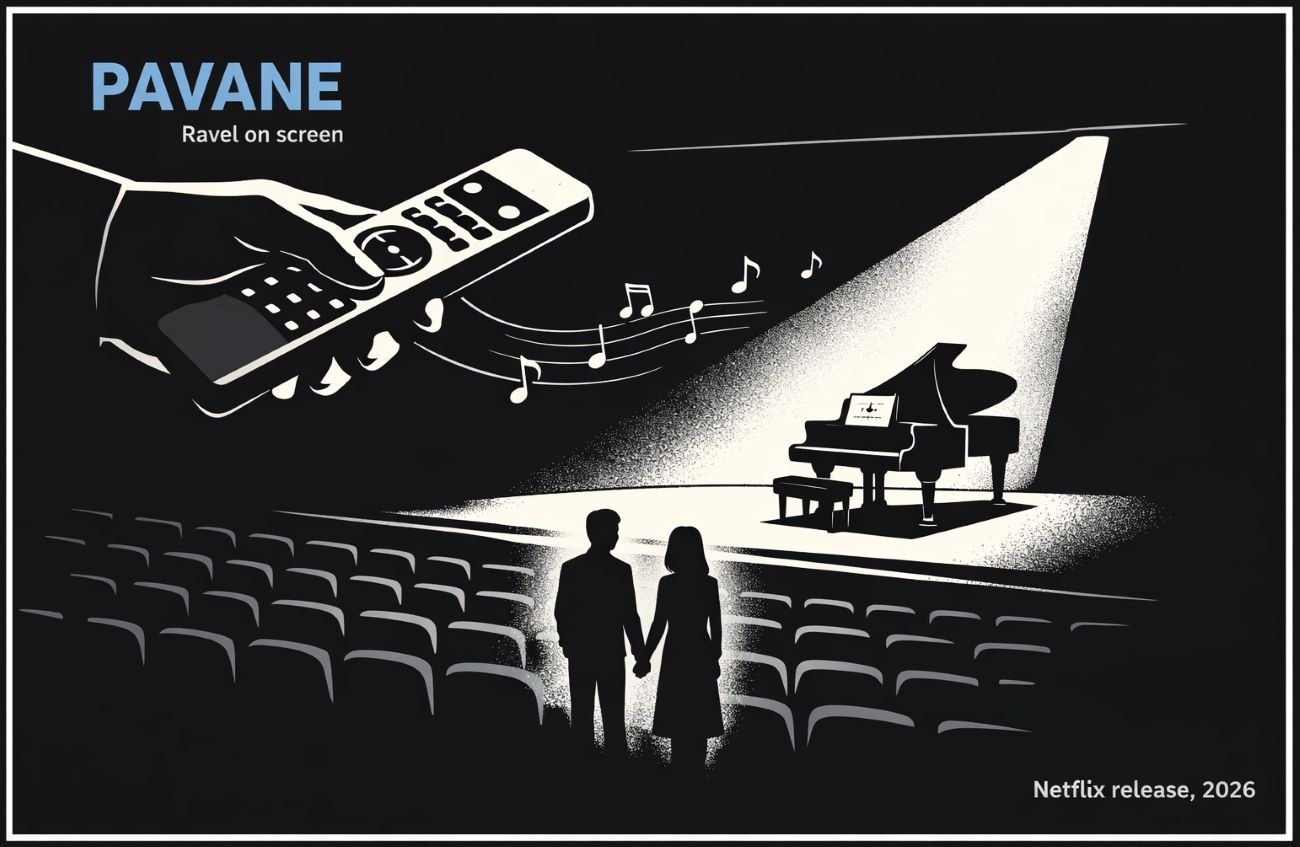
Lede
A streaming app just used a 1899 piano piece as a defibrillator for modern romance, and the multiplex is somewhere eating nachos, unbothered.
Hermit Off Script
I usually keep my roasts for cinema releases, because that is where the industry goes to charge you full price for half a soul. But then Netflix quietly drops Pavane and it ruins my routine, because this is exactly the kind of film I would have watched on an IMAX screen without blinking. Not for explosions, not for noise, but for space. Space for a glance to land. Space for silence to mean something. Space for music to do what modern scripts keep forgetting how to do: carry the heart when words get clumsy. And of course it is a Korean film, because Korean cinema has this unfair habit of treating romance like a serious art form, not a guilty snack. It brings education and culture to younger generations without waving a banner about it. It just places beauty in front of you and lets you become better behaved in its presence. This time the gift is Ravel, those piano pieces that move like velvet and grief at the same time, and the film threads them into a romantic story the way only Korean cinema dares to do it: with tenderness, patience, and that quiet insistence that love is not a gimmick, it is a discipline. It is a treat for romantic souls, and for anyone who still believes cinema can be gentle without being weak. That is why streaming has been pulling ahead lately, not because it is virtuous, but because it is willing to release work that still remembers what a heartbeat sounds like. Meanwhile too many cinema releases have become louder, shinier, and flatter, like they are terrified of intimacy, like they think sincerity is bad for the opening weekend. Pavane does not posture. It just breathes. And in a landscape of shallow spectacle, that feels almost indecently alive.
P.S. The most beautiful if not interesting answer to the question of so many “Why do you like me?”: “You couldn’t ask someone who’s trapped underwater why they’re drowning. How would you?”
Pavane | Official Trailer | Netflix [ENG SUB]
Pavane on Netflix: Three Lives, One Slow Dance
In the basement levels of a Seoul department store, three twentysomethings with private wounds collide, and discover that love can be learned like a slow dance.
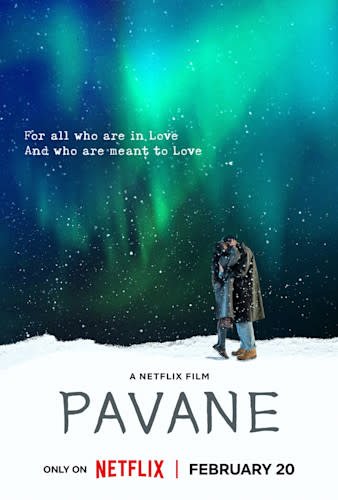
Mi-jeong keeps her head down at work, shrinking from other people’s stares after a lifetime of being judged for her appearance. In the same building, Yo-han hides his own hurt behind loud charm and a free-spirited swagger in the car park, while Gyeong-rok drifts through dead-end shifts after giving up on his dream. When their paths tangle in the department store’s back corridors and underground spaces, the three begin, awkwardly and stubbornly, to become each other’s light: friendship turning into a bruised, tender love triangle that asks one simple question, over and over: are you capable of letting someone in?
Cast and credits
Director: Lee Jong-pil
Writers: Lee Jong-pil, Son Mi (screenplay); Park Min-gyu (novel)
Genre: Romantic drama
Main cast: Go Ah-sung, Byun Yo-han, Moon Sang-min
Composer: Minhwi Lee
Production company/studio: The Lamp; Plus M Entertainment
Runtime: 113 minutes
Release year and platform: 2026 – Netflix (released 20 February 2026)
Pavane for a Dead Princess (죽은 왕녀를 위한 파반느): Romance with teeth
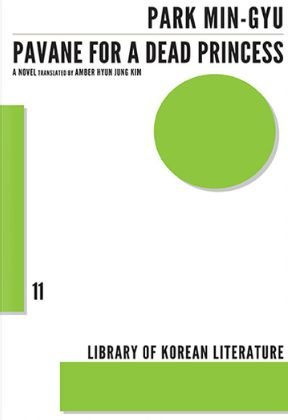
Park Min-gyu wrote this in 2009, and it reads like a love story that keeps checking your receipts for how you treat people who do not look like adverts. It is openly taking a swing at the beauty fetish in popular culture, then cheekily doubling the dose with a “writer’s cut” that offers alternate versions of the same story, as if even the narration is side-eyeing your assumptions. If you want romance that is tender but not stupid, this is the blueprint the film borrows its spine from.
Park Min-gyu (박민규): The comedian with a scalpel

Born in 1968, Park writes with humour that does not exist to be cute, it exists to smuggle serious questions past your ego. He is also not some random darling the industry found last Tuesday: he has stacked major Korean literary awards across the 2000s, including Munhakdongne (2003), Hankyoreh (2003), Hwang Sun-won (2009), and Yi Sang (2010), which explains why the story can be warm while still being merciless about social cruelty. He is the kind of writer who can make you laugh and then realise you are laughing at yourself.
What does not make sense
- A film called “Pavane” should be grand, yet it wins by being small. That is the joke on the industry.
- Cinemas keep selling “event movies” while Netflix drops a modest melodrama to about 190 territories in one click.
- The title points you to a slow court dance, but the modern film world still runs like everything needs to sprint.
- Romance is treated like a guilty pleasure in big releases, yet here it is treated like the main human skill.
- We keep pretending streaming is killing cinema, when cinema is perfectly capable of doing that job itself.
Sense check / The numbers
- Pavane premiered on Netflix on 20 February 2026. [Korea Times]
- It is based on Park Min-gyu’s best-selling 2009 novel Pavane For A Dead Princess. [Straits Times]
- The film is directed by Lee Jong-pil and stars Go Ah-sung, Byun Yo-han, and Moon Sang-min. [Korea Times]
- The running time is 113 minutes. [Wikipedia]
- Ravel wrote “Pavane pour une infante defunte” for piano in 1899 and orchestrated it in 1910; performances are typically about 6 to 7 minutes. [LA Phil]
The sketch
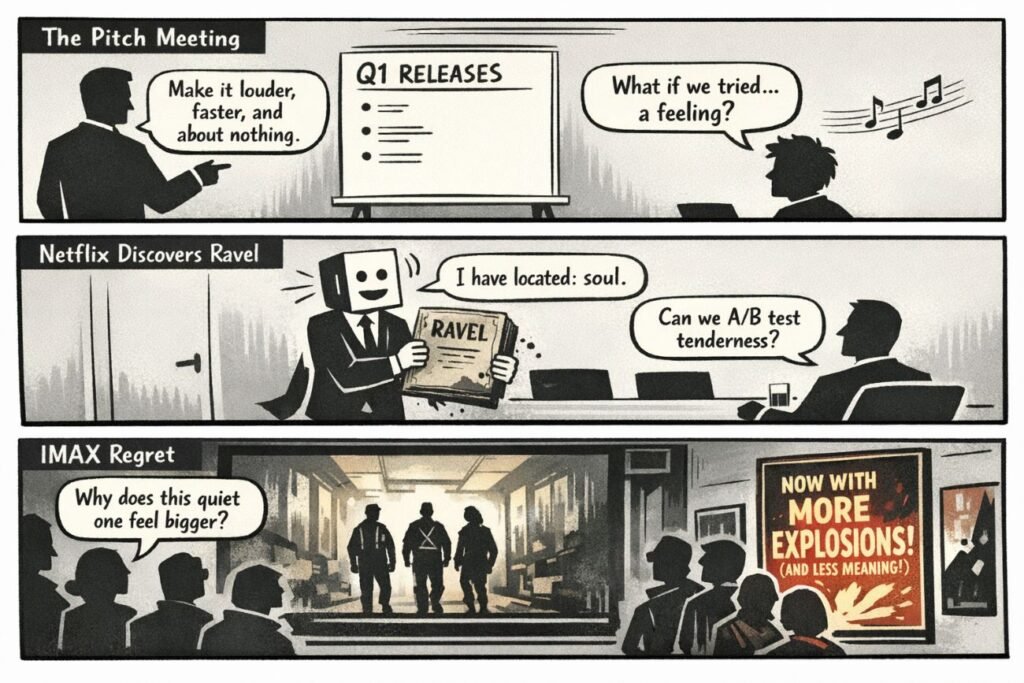
Scene 1: “The Pitch Meeting”
Panel: A cinema executive points at a whiteboard labelled “Q1 Releases”. A lonely violin plays off-screen.
Dialogue:
Exec: “Make it louder, faster, and about nothing.”
Intern: “What if we tried… a feeling?”
Scene 2: “Netflix Discovers Ravel”
Panel: An algorithm in a suit drags a dusty music score into a boardroom like it found fire.
Dialogue:
Algorithm: “I have located: soul.”
Executive: “Can we A/B test tenderness?”
Scene 3: “IMAX Regret”
Panel: A giant IMAX screen shows four ordinary workers in a basement corridor, framed like mythology. Outside, a multiplex queue shuffles past a poster that screams in neon.
Dialogue:
Viewer: “Why does this quiet one feel bigger?”
Cinema Poster: “NOW WITH MORE EXPLOSIONS (AND LESS MEANING)!”
What to watch, not the show
- The streaming release model: smaller films can go global instantly, without begging for screens.
- Korea’s cultural export engine: popular novels and grounded melodramas become accessible “soft education” for mass audiences.
- The incentives of cinema programming: spectacle is easier to market than intimacy, even when intimacy is what people actually remember.
- Algorithmic comfort: platforms can package “art” as a genre tile, then let you find it whenever, not only when a multiplex tells you to show up.
- The long-term risk: if cinemas only bet on noise, they will train audiences to stop listening.
The Hermit take
Let romance be slow again, and it starts sounding like truth.
If you need Ravel to remember that, fine – just press play.
Keep or toss
Keep
Keep the restraint, the tenderness, and the audacity to be ordinary.
Toss the industry’s belief that “cinema” means “loud”.
Sources
- IMDb listing for Pavane (tt39387657): https://m.imdb.com/title/tt39387657/
- The Korea Times on the film, cast, source novel, and Netflix date: https://www.koreatimes.co.kr/entertainment/films/20260212/korean-film-pavane-offers-story-of-love-salvation
- The Straits Times on the film, the 2009 novel, and the global Netflix rollout: https://www.straitstimes.com/life/arts/director-cast-on-being-drawn-to-the-low-key-love-triangle-in-netflix-film-pavane
- Wikipedia entry with runtime and release details: https://en.wikipedia.org/wiki/Pavane_%28film%29
- LA Phil piece notes on Ravel composition year and orchestration year: https://www.laphil.com/musicdb/pieces/549/pavane-pour-une-infante-defunte
- Three Percent on Park Min-gyu being inspired by Ravel: https://www.rochester.edu/College/translation/threepercent/2015/07/20/pavane-for-a-dead-princess/
- Ravel performance (YouTube): https://youtu.be/q9tcHoD6r0c?si=y-e8KwxtK3w2TRRh
- Words Without Borders review noting the novel (2009) and Park’s earlier works: https://wordswithoutborders.org/book-reviews/park-min-gyus-pavane-for-a-dead-princess/
- Words Without Borders author bio listing major awards: https://wordswithoutborders.org/contributors/view/pak-mingyu/

Leave a Reply